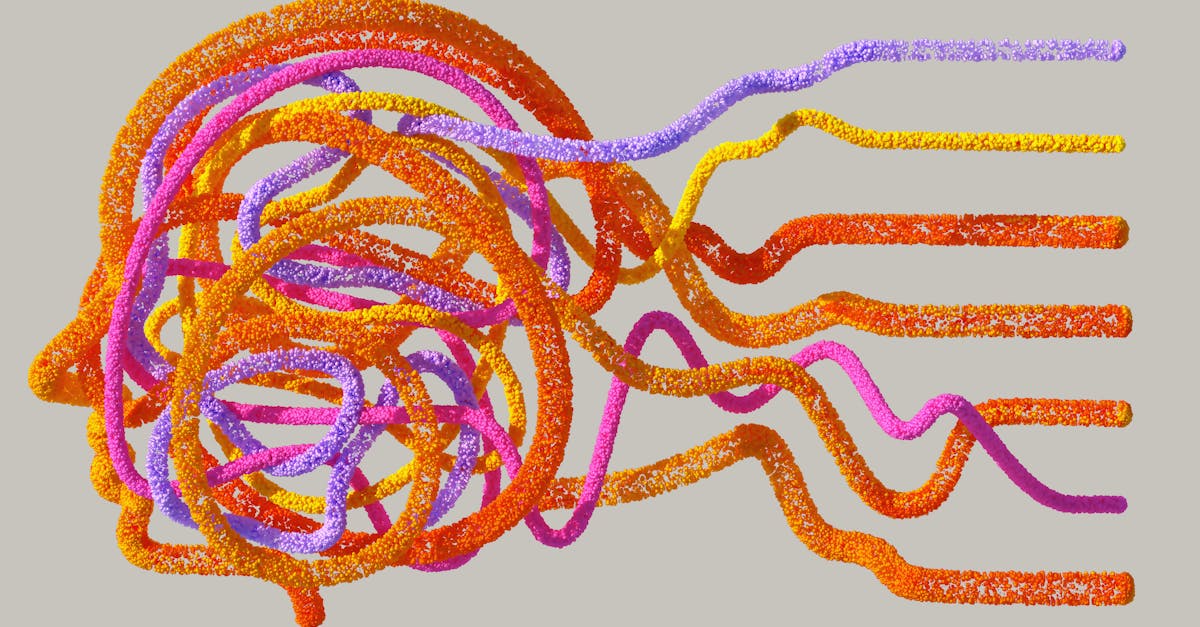
The digital landscape today often feels like a constant push towards automation. Everywhere you look, there’s a new tool promising to streamline your creative process, boost your output, or eliminate the dreaded blank page. For a long time, I bought into that promise, particularly when it came to crafting complex prompts for various projects. I used AI to generate initial ideas, refine language, and even structure entire creative briefs. It was fast, efficient, and, for a while, seemed indispensable. But after a few months, I noticed a subtle, yet unsettling, shift: my own creative muscles felt atrophied. The thrill of discovery, the slow burn of wrestling with an idea until it clicked, was fading. The outputs were good, often excellent, but they felt less mine. This observation led to an experiment: for six months, I would intentionally avoid using AI for any complex prompt generation. I’d lean solely on my own mind, traditional brainstorming techniques, and human collaboration. What I learned surprised me, not just about the limitations of AI, but about the profound value of human cognitive friction.
Key Takeaways
- Over-reliance on AI for complex prompting can diminish your unique creative voice and problem-solving skills.
- Human iteration and collaborative feedback cycles, though slower, yield deeper, more original, and resilient prompt structures.
- Intentional constraints and forced manual ideation can significantly improve your understanding of underlying project needs.
- The time saved by AI in initial generation often gets re-spent in exhaustive refinement to align with nuanced human intent.
The Erosion of Intuition: Why My Prompts Started Feeling Generic
Before my six-month detox, I was a heavy user of AI for anything requiring a detailed prompt. Need a prompt for a new marketing campaign concept? AI. A nuanced request for an image generation model? AI. A structured brief for a new article angle? AI. The results were always functional. They hit the keywords, they structured the requests logically, and they saved me considerable time in initial drafting. The problem, I realized in retrospect, was that functional isn’t inspired. My prompts, while technically sound, started to share a certain blandness, a predictable cadence that lacked the spark of genuine human intuition.
In my experience, AI excels at identifying patterns and replicating established structures. This is fantastic for routine tasks, but for complex creative prompts, it became a double-edged sword. When I was brainstorming a prompt for a speculative fiction story about societal collapse, AI would quickly generate ideas based on common tropes: resource scarcity, government breakdown, plucky survivors. All valid, but none truly novel. My own internal dialogue, the messy, non-linear process of connecting seemingly unrelated concepts, was being bypassed. The subtle emotional hooks, the unexpected juxtaposition of ideas that give a prompt its unique flavor, were absent. I found myself accepting the AI’s first or second suggestion, rather than pushing through the discomfort of original ideation.
What changed everything for me was forcing myself to sit with the ambiguity. Instead of typing a basic request into a model and receiving a polished prompt, I’d start with a blank document and a vague concept. I’d free-associate, jot down disconnected words, draw crude mind maps. This often felt slower and more frustrating initially, but the quality of the raw material, the genesis of the prompt, improved dramatically. I rediscovered how to build a prompt from the ground up, infusing it with specific constraints and creative nuances that an AI, by its very nature, couldn’t anticipate because it wasn’t connected to my lived experience or subconscious creative wellspring.
The Unexpected Depth of Human Iteration
One of the biggest selling points of AI for prompting is its speed. You get an output almost instantly. But what I discovered during my six-month experiment is that this speed often masked a critical missing step: genuine iteration rooted in human feedback and evolving understanding. When I used AI, I’d get a prompt, make a few tweaks, and move on. The sense of completeness was misleading.
Without AI, my process became more collaborative and iterative in a different way. I’d draft a prompt for a client’s content piece, then share it with a colleague. Their questions, interpretations, and suggestions weren’t just about syntax; they were about intent. “What emotion are we really trying to evoke here?” or “Does this truly capture the unique selling proposition?” These questions forced me to dig deeper, articulate my vision more clearly, and often revise the prompt to be fundamentally stronger. This back-and-forth, the verbal sparring with another human mind, exposed gaps in my own thinking that AI simply couldn’t. AI can flag logical inconsistencies, but it can’t challenge the why in the same way a human collaborator can.
For example, I was working on a prompt for an article on sustainable urban development. My initial human-generated draft focused on technological solutions. A colleague pushed back, asking, “But what about the human element? The community engagement? The social justice aspects?” This immediately broadened my perspective, leading to a much richer, more comprehensive prompt that encompassed socio-economic and ethical considerations alongside technological ones. This kind of organic evolution, driven by diverse human viewpoints, is something I found irreplaceable. The time invested in these discussions was not lost; it was gained in a more robust, multifaceted final prompt.
The True Value of Intentional Constraints
When using AI, it’s easy to ask for anything and then try to pare it down. It feels like boundless possibility. But what I learned from my self-imposed constraint of no-AI-for-complex-prompts was the immense power of intentional limitations. When I knew I couldn’t just throw keywords at an AI and expect a miracle, I became far more deliberate about what I asked for.
I’d start with a mental ‘constraint list’ before even writing a single word of the prompt. What’s the core message? Who is the audience? What specific tone are we aiming for? What are the non-negotiables? What are the desired outcomes? By defining these boundaries upfront, I forced my own brain to operate within a more focused framework. This might sound counterintuitive to creativity, but in my experience, true originality often blossoms within carefully constructed fences.
Consider a project where I needed a prompt for a series of social media posts. With AI, I might have said, “Generate engaging social media posts about eco-friendly products.” The AI would provide generic, albeit polished, options. Without AI, I would intentionally constrain my process: “Generate three Instagram captions (max 150 characters each) for our new bamboo toothbrush, focusing on ‘morning routine aesthetics’ and a ‘call to mindful living,’ using emojis sparingly and targeting urban millennials.” This level of specificity, born from a deliberate, manual ideation process, led to prompts that were far more targeted and effective, even before the content was generated. It made me a better prompt engineer myself, not just a prompt operator.
Reclaiming the ‘Discovery Debt’ of Automated Ideation
I used to think AI was saving me time on complex prompts. And in the very initial stages of typing, it certainly felt that way. A few seconds, and a draft appeared. But what I failed to account for was the ‘discovery debt’ – the time I later spent trying to retroactively inject my unique perspective, nuance, and true intent into an AI-generated prompt. This wasn’t just about editing; it was about trying to make something generic feel personal.
Without AI, my initial ideation phase was slower, but it was also richer in discovery. I’d research, read analogous content, reflect, and let ideas simmer. This active engagement meant that by the time I sat down to write the prompt, I had a much deeper understanding of the project’s soul, its potential pitfalls, and its unique angles. The prompt I produced was not just a request; it was an encapsulation of that personal discovery process.
For instance, I was drafting a prompt for a blog post about overcoming imposter syndrome. With AI, I might have gotten a prompt focusing on common advice. Without it, I spent hours reading first-person accounts, psychological studies, and even personal essays. This deep dive allowed me to craft a prompt that emphasized not just solutions, but also empathy and the normalization of the feeling, drawing on specific, evocative language I wouldn’t have found through a quick AI query. The result was a prompt that resonated more deeply with the intended audience because it was built on a foundation of genuine human insight and struggle, not just surface-level information retrieval.
The Resurgence of My Own Creative Voice
The most profound revelation from my six months without AI for complex prompts was the resurgence of my own creative voice. It wasn’t just about better prompts; it was about feeling more creatively alive. The initial outputs from AI are often so polished that they unintentionally stifle the human urge to improve, to make it more unique. When I removed that safety net, I was forced to confront my own creative capacity, to push past the obvious, and to trust my own judgment.
This meant accepting messy first drafts. It meant spending more time staring at a blank screen, wrestling with words, and experimenting with different approaches. It meant recognizing that true creativity isn’t always about speed; it’s often about persistence, reflection, and the courage to stray from the well-trodden path. My prompts became more distinct, carrying my personal fingerprint, simply because I was the sole architect from concept to final wording.
The trade-off, of course, is time. Human ideation is not as fast. But for complex, nuanced, or truly creative projects, the speed of AI often comes at the cost of originality and depth. For me, that trade-off was worth it. I emerged from those six months with a renewed appreciation for my own cognitive abilities and a clearer understanding of where AI truly shines (e.g., routine tasks, information synthesis) and where it can inadvertently hinder growth (e.g., complex creative ideation).
Frequently Asked Questions
How do you define a ‘complex prompt’ in this context?
A ‘complex prompt’ refers to a request that requires significant nuance, creative depth, specific emotional resonance, multi-faceted considerations, or a highly original angle. It’s not just about asking for factual information or a simple rephrasing; it involves crafting an instruction that guides a creative process in a truly unique and intentional direction, often for a human or a highly sophisticated generative model where subtle phrasing makes a significant difference.
Did you stop using AI entirely during this period?
No, I did not stop using AI entirely. My experiment specifically focused on avoiding AI for the generation of complex prompts. I still used AI for routine tasks like summarizing long documents, quick data extraction, basic grammar checks, or generating simple, factual answers. The goal was to isolate the impact of AI on my creative prompting capabilities, not to abandon it completely.
What specific human-centric techniques did you rely on instead of AI?
I relied heavily on several human-centric techniques. These included free association, mind mapping (both digital and pen-and-paper), brainstorming sessions with colleagues, ‘first principles’ thinking (breaking down problems to their fundamental truths), reverse outlining, using intentional constraints (e.g., character limits, specific emotional tones), and extensive manual research and reflection. The key was to force my own brain to make the connections and generate the initial concepts.
How did this experiment impact your productivity for these complex tasks?
Initially, my productivity for generating complex prompts decreased, as the manual ideation process is inherently slower than instant AI generation. However, I found that the quality of the initial prompt was significantly higher, leading to less time spent on post-generation refinement and correction. This often meant the overall time-to-final-output didn’t necessarily increase, and in many cases, the superior quality of the final product justified the slower start.
What advice would you give someone looking to reduce their reliance on AI for creative tasks?
Start small. Identify one area where you feel your creative muscle is weakening due to AI reliance and commit to a period of manual ideation for that specific task. Embrace the discomfort of the blank page. Seek out human collaborators for feedback and discussion. Introduce intentional constraints into your process. Reflect on the ‘why’ behind your creative requests, not just the ‘what.’ And remember, the goal isn’t necessarily to abandon AI forever, but to find a balanced approach where your human ingenuity remains the primary driver of truly complex and original work.
The Dialectic of Human and Machine
My six-month experiment wasn’t about declaring AI good or bad, or choosing one over the other. It was a personal journey to understand the symbiotic, and sometimes parasitic, relationship between human creativity and artificial intelligence. What I learned is that for genuinely complex, nuanced, and original prompt generation, the human touch, with all its messiness and inefficiency, remains paramount. AI is a magnificent tool for amplification and efficiency, but it cannot (yet) replace the unique wellspring of human experience, intuition, and collaborative discovery that truly innovative prompts demand. Moving forward, my approach will be a deliberate dance: leveraging AI for what it does best – pattern recognition, speed, and scaling – while jealously guarding and cultivating the uniquely human aspects of my creative process.