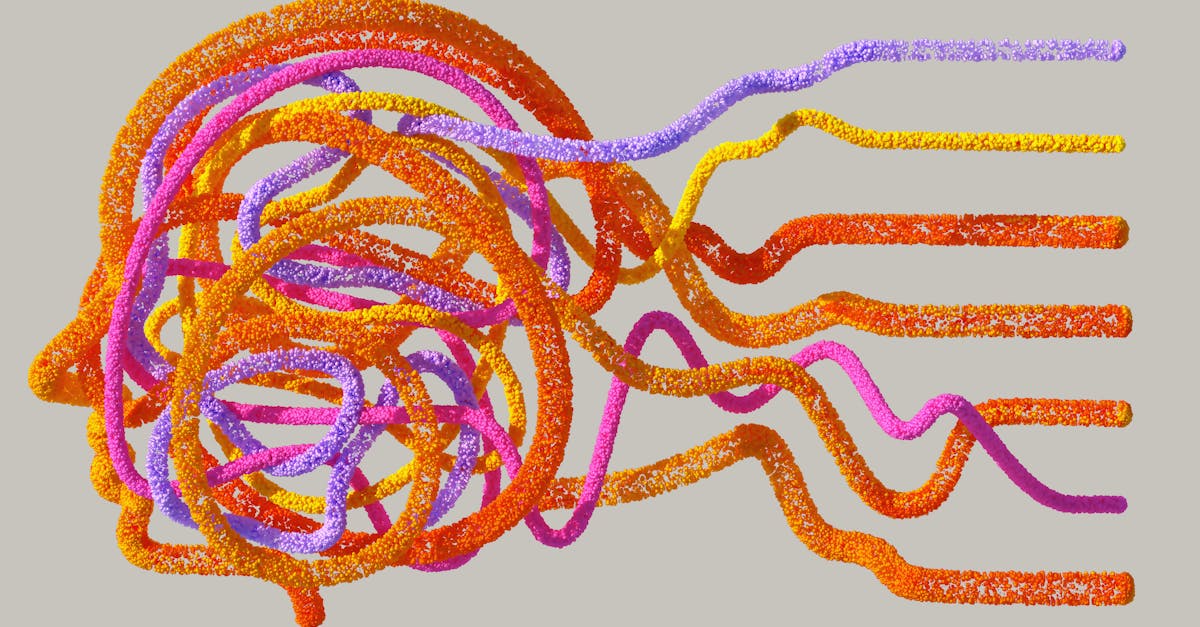
For nearly a year, I leaned heavily on generative models for creative ideation, especially when facing complex, multi-layered prompting tasks. My routine was predictable: outline the core problem, break it into components, feed each piece to an AI, and then synthesize the results. It felt efficient. It felt modern. Most importantly, it felt like I was leveraging a powerful new tool to overcome creative blocks. But after a while, I noticed a subtle sameness in the output. The ideas were good, but rarely groundbreaking. They were variations on existing themes, well-articulated but lacking that spark of true originality. The AI was an excellent compiler of information, but not a true innovator.
This led me to an experiment: for six months, I completely cut out AI assistance for any creative prompting that required more than a simple fact lookup or stylistic tweak. No more feeding the AI a complex problem and asking for solutions. No more relying on it to brainstorm novel angles. This wasn’t about proving AI was bad; it was about understanding what its constant presence was doing to my own creative process. What I discovered wasn’t just about output quality; it was about the subtle, often overlooked ways human cognition navigates complexity, synthesizes disparate ideas, and ultimately generates truly new insights.
Key Takeaways
- True creative breakthrough often requires wrestling with ambiguity and resisting the urge for immediate, perfect answers.
- Forced constraints in ideation, rather than open-ended brainstorming with AI, led to genuinely novel solutions.
- The iterative process of human thought, including distraction and subconscious processing, is crucial for complex problem-solving.
- Externalizing ideas through handwritten notes and visual mapping deepened conceptual understanding in a way AI couldn’t replicate.
Embracing the ‘Messy Middle’ of Ideation
My biggest revelation was that AI, with its speed and immediate coherence, actively shielded me from the ‘messy middle’ of ideation – the uncomfortable, non-linear phase where true creativity often emerges. When I’d hit a wall before, I’d simply re-prompt the AI, hoping for a magic bullet. The AI would always deliver something, a plausible next step, but it often steered me away from the deeper, more challenging questions that could lead to genuine breakthroughs.
Without AI, I was forced to sit with the ambiguity. I’d spend hours just jotting down seemingly disconnected thoughts, drawing diagrams, or simply staring at a whiteboard. This wasn’t unproductive; it was a crucial period of incubation. In one instance, I was tasked with developing a new content series for a niche market. My initial AI-assisted attempts focused on standard ‘how-to’ guides. Without the AI, I found myself exploring the emotional pain points of this audience, mapping out their entire workflow, and identifying subtle points of friction that a more generalized ‘AI solution’ would have completely missed. This led to a series concept that wasn’t just informative, but deeply empathetic and, in my opinion, far more original than anything the AI had suggested.
The lesson here is counter-intuitive: sometimes, the most productive thing you can do for complex creative problems is to resist the urge for immediate solutions. Allow yourself to wander, to explore adjacent territories, and to sit with the discomfort of not having a clear answer. This ‘messy middle’ is where unexpected connections are forged.
The Power of Deliberate Constraints Over Broad Prompts
When using AI, my prompts for creative tasks tended to be broad: ‘Generate ideas for a marketing campaign for X product,’ or ‘Brainstorm innovative features for Y software.’ The AI would return a long list of plausible, but often generic, ideas. The problem wasn’t the AI; it was my prompting, influenced by the AI’s ability to handle vast, unconstrained requests.
My six-month experiment forced me to rethink this. Instead of broad strokes, I started imposing deliberate constraints on myself. For a product naming project, instead of ‘Suggest names for a new tech gadget,’ I’d force myself to think: ‘Generate names that are exactly two syllables, start with a hard ‘K’ sound, and evoke a sense of speed without using the word ‘speed.” This initial constraint, which felt limiting at first, actually unlocked a torrent of more focused and original ideas.
Here’s why this works: when you give yourself strict boundaries, your brain is forced to work harder within those confines. It can’t simply pull from a vast, undifferentiated pool of knowledge. It has to bend, combine, and reinterpret existing elements in novel ways to fit the new rules. This process is inherently more creative than simply expanding on a vague directive. For another project, I needed to design a workflow. Instead of asking for ‘an efficient workflow,’ I designed for ‘a workflow that minimizes human error and reduces setup time by 50% and can be scaled by a non-technical user.’ The specificity, rather than the breadth, became the engine of innovation.
To truly innovate, impose specific, even arbitrary, constraints on your initial ideation. This forces your brain into more creative pathways than simply asking for ‘more ideas.’
The Unsung Role of Distraction and Subconscious Processing
AI is relentless. It processes information instantly, linearly, and without interruption. While this is a strength for many tasks, I found it to be a creative detriment. My old process was to prompt, review, re-prompt, review. There was little room for the kind of mental wandering that, in my experience, is essential for complex problem-solving.
Without the AI’s immediate presence, I rediscovered the value of stepping away. I’d grapple with a problem, take notes, then go for a walk, cook dinner, or even just stare out the window. It was during these periods of ‘distraction’ that solutions or new angles would often bubble up from my subconscious. This isn’t magic; it’s how the brain consolidates information, makes unexpected associations, and works through challenges in the background. Neuroscientists call it incubation, and it’s a powerful cognitive tool that AI simply doesn’t possess.
One particularly tricky problem involved streamlining a multi-departmental reporting process. I spent an entire morning mapping out the existing, convoluted system. Frustrated, I left my desk for a run. During the run, a completely novel, simplified data flow suddenly clicked into place. It wasn’t something I could have ‘prompted’ into existence; it required a break from conscious effort to allow my brain to make those lateral connections. This highlights a crucial human advantage: our ability to process information non-linearly and make intuitive leaps outside of direct, conscious engagement. AI, for all its power, is still operating within the confines of its programmed logic.
The Tactile Advantage of Externalizing Ideas
My default method for creative work, once I started using AI, became almost entirely digital: typing prompts, receiving text, copying and pasting. While efficient, it lacked a certain tactile engagement that I now realize is crucial for deeper understanding and synthesis.
During my AI-free period, I gravitated back to physical tools: large whiteboards, colored markers, stacks of sticky notes, and even just pen and paper. The act of writing, drawing, and physically moving elements around a space engaged different parts of my brain. There’s a tangible difference between seeing a bulleted list of ideas on a screen and physically writing them out, circling connections, drawing arrows, and re-arranging them on a wall. This physical manipulation created a deeper, more embodied understanding of the problem and its potential solutions.
For a new product feature design, I spent days sketching user flows on butcher paper spread across my office floor. The ability to literally walk around the problem, add sticky notes to different sections, and visually map out dependencies in a sprawling, non-linear fashion was invaluable. It allowed me to identify bottlenecks and user pain points that a purely textual or screen-based approach had obscured. This externalization, the physical act of bringing abstract ideas into the tangible world, made the concepts more concrete, easier to manipulate, and ultimately, more creatively fertile. The constraint of needing to physically write and move things, rather than just edit text, forced a higher level of conceptual clarity.
Frequently Asked Questions
How did you define ‘complex creative prompts’ for this experiment?
I defined them as any task requiring original ideation, synthesis of disparate concepts, or problem-solving without a clear, formulaic answer. This excluded simple tasks like rephrasing a sentence, summarizing a document, or generating stylistic variations of an existing idea.
Did you completely stop using AI for all work during these six months?
No. I continued to use AI for tasks where its speed and efficiency were a clear benefit, such as initial research, drafting routine communications, data analysis, or basic coding assistance. The experiment was specifically about creative ideation and complex problem-solving.
What was the biggest challenge in working without AI for creative tasks?
The biggest challenge was resisting the urge for immediate gratification. AI provides answers quickly, and retraining my brain to embrace the slower, more ambiguous process of human ideation, including sitting with unanswered questions, was difficult initially.
Do you plan to reintroduce AI into your creative process?
Yes, but with a fundamentally different approach. My goal isn’t to eliminate AI, but to understand its true role and my own cognitive strengths. I’ll use it as a powerful tool for augmentation and refinement after I’ve engaged in the initial, messy, human-driven ideation phase. The key is to leverage its efficiency without ceding the crucial creative groundwork to it.
How long did it take to see a shift in your creative output?
The shift began to become noticeable after about 6-8 weeks. Initially, it felt slower and more cumbersome, but as I adjusted to the new process, the quality and originality of my ideas started to improve significantly.
Conclusion
My six months without AI for complex creative prompting wasn’t a rejection of the technology, but a deep dive into my own cognitive processes. What I found was that true innovation often thrives in the uncomfortably ambiguous, the deliberately constrained, the subconsciously processed, and the tactilely expressed. AI is an incredible tool for efficiency and scale, but for generating truly novel, deeply insightful ideas, the messy, non-linear, and often slow journey of human creativity remains unparalleled. Moving forward, my strategy isn’t to choose between human and AI, but to understand precisely where each excels, ensuring I use AI to augment, rather than replace, the uniquely human spark of invention.